Tuesday, November 9, 2010

How to Keep the Excitement Alive in a Series


On several lists I’m on I’ve read the question, “When is it Time to End a Series?”

I’ve pondered that and realized that counter to that question is another question, “How do you keep the excitement alive in a series?”

One thing I’ve noticed in a couple of ongoing series is that sometimes the main character never changes, and I think this can be deadly. Though the hero or heroine may have the same job, the events he or she lives through must have some effect on him or her. All of us grow and change because of both the good things and the crises that happen in our lives; so it should be for the on-going characters in a series.

Invisible Path is either the ninth or tenth book in my Deputy Tempe Crabtree series. The publisher, Mundania Press, says ninth, but in fact there have been ten including the prequel, Deadly Trail, published by Hard Shell Word Factory, now a part of Mundania. I suspect one of these days the prequel will appear with the other Tempe books on Mundania’s website.

In the prequel, Tempe is a widowed mom of a young teenaged son though she is dating the minister of the local church, but wedding plans are interrupted because of a murder—of course.

In subsequent books, Tempe and Hutch are married, most of the time happily though they do clash at times--mostly on spiritual matters. Tempe’s son, Blair grows older, graduates from high school and goes onto college to pursue his love of firefighting. Because of her job as resident deputy, Tempe must takes risks, often putting her own life in jeopardy. At the start of their married life, Hutch has trouble understanding and fears for Tempe. As time passes, though he never likes it, he is able to come to terms with what goes along with his wife’s job.

Even less major but ongoing characters change. Detective Morrison who in many books has little respect for Tempe, partly because she’s female and partly because of her Native American heritage, starts to accept Tempe as a competent law enforcement officer.

Though most of the books are set in the Southern Sierra in and around the fictitious town of Bear Creek, Tempe’s investigations take her into new areas of the mountains and the Bear Creek Indian Reservation. The town of Bear Creek and the reservation have an uncanny resemblance to the little town where I live and the nearby Indian reservation.

Most of the books have a bit of Indian mythology or legend as part of the plot, which I hope will intrigue the readers of the series and keep them coming back to find out more.

To be perfectly honest with you, I won’t quit writing the series until I don’t have any more dilemmas to confront Tempe with or murders for her solve. I face each new book wondering what will happen to Tempe. She and her husband and the people who populate Bear Creek and the Bear Creek Indian Reservation are as real to me as my own family and friends. Because I am excited about what is going to happen to them next, I hope my readers will be too.

Invisible Path can be purchased as a trade paperback or e-book from or any of the usual online bookstores.


EXCERPT

“Jesus, I need to talk to you.”

My grandma was the only one who could get away with pronouncing my name like Jesus in the Bible. My friends say it like “Hay-soos.” Grandma didn’t like it when she heard someone say my name like that. She usually corrected whoever it was by saying, “My grandson is not Mexican, he is Indian. His name is Jesus Running Bear.”

I don’t know what inspired my mother to give me such a name, and she wasn’t around to ask.

Grandma fixed her small dark eyes on me. When she smiled her eyes became crescent moons. She wasn’t smiling now. Whatever it was she wanted to say, it had to be important.

I put down the bowl I’d gotten out of the cupboard. Breakfast would have to wait.

“You’ve been thinking about something a lot. Something that’s going to give you problems.” Grandmother’s face was round, weathered, and brown as a nut. Her gray hair was pulled straight back and arranged in a bun. Wiry strands escaped and poked out around her ears and the nape of her neck. She wore a man’s red plaid shirt with the sleeves rolled up to her elbows, over a pair of faded blue jeans. Beneath the baggy clothes, she was slim and muscled. Her toes peeked out from a pair of worn leather sandals.

I loved my grandma; after all she was the one who raised me after my mother left me alone while she went on a three day drunk. My uncle found me and brought me to grandmother’s house where I’ve been ever since. No, I don’t miss my mother because I don’t even remember her. I only know what I’ve been told about her—not much of it good.

I wasn’t sure what kind of problem Grandma meant. Sure, I’d been going down to the beer joints with my cousin and friends even though I knew she didn’t want me drinking. Maybe that’s what this was about. I respected my grandmother, but I hadn’t obeyed her warning about never touching alcohol. She hated alcohol. Grandfather had died from drinking too much. Maybe my mother was dead too. No one had heard from her in years.

“Come. Sit down.” She motioned to the chair where I usually sat. In front of her was a cup of tea. “We’re going to find out exactly what is going on with you.”

I sat on the edge of the seat. She was going to do some weird Indian stuff. We were Miwok—though we didn’t live on or near a reservation. We lived in a small town in the foothills above Modesto which is in the Central Valley of California. Frankly, I didn’t know much about my heritage except what my grandma told me.


She was an amazing woman, and could do so many things. I was proud of most of what she did. She knew how to gather herbs that could cure most sicknesses. She wove beautiful baskets that she sold at Pow Wows and to tourists in gift shops in Yosemite and other places.

When I was a kid, she took me on camping trips into the back country. She could out hike me even today. But I wasn’t crazy about all the Indian stuff she did that I didn’t understand.

Grandma stared into the cup and began speaking in her native language. That’s what she always did when she was concentrating on something.

She lifted her head and fixed her eyes on me again. “You’re looking for a girlfriend. That’s it, isn’t it?”

Well, sure. What young guy isn’t trying to find a girl? But for once I was smart enough to keep my mouth shut.

Again, she peered into the cup. “I see all kinds of women. Be careful not to choose the wrong one. If you do, you’ll be miserable.”

She stared and her eyes looked funny, like she was seeing something far, far away.

I squirmed, wondering where this was leading. Maybe she already had someone picked out for me.

“I see a pretty girl with a nice figure. She has long straight hair, clear down to her waist. She’ll wiggle her plump bottom and you won’t be able to think. Women have power–especially young pretty ones. Don’t you so much as give her more than a passing glance. If you do, you’ll be miserable your whole life.” Grandma didn’t look up.

In my mind I could see the pretty girl walking down the street, her shiny black hair swinging back and forth like her hips.

After a few minutes my day dream ended when Grandma said, “There’s another one. Short and skinny like I was when I was young. But beware, she’s nothing like me. This one is sneaky. She’ll act like she cares for you when she has lots of other men.”

Interesting. This was more fun than I’d expected.

“I see another one, curly headed and laughing. She’ll welcome you to her bed.”

This was sounding better and better, and I risked a smile.

“Take my warning, grandson. Don’t marry her. She knows nothing about being a wife or taking care of children. She only knows how to have fun. She only wants to party, party, party. She’s not for you.”

I was beginning to wonder if there was anyone Grandma would see in that teacup who was good enough for me.

“Ah, there’s the one you must look for. She’s a sweet girl, with dark brown wavy hair and a dimple in one cheek. She knows and respects the old ways.”

“Where is she? Does she live around here?” I was ready to introduce myself to this wonderful woman.

“No, she lives far away. It may take a long, long while before you meet her.”

That wasn’t such good news. “How will I find her?”

“The path lies straight ahead. Sometimes it will be invisible, but it’s always there.”

Grandma’s discussion about my future seemed to be over.

She picked up the cup and dumped the dregs in the sink. Wiping her hands on a tea towel that had been draped through the handle of the old refrigerator, she asked, “Are you ready to eat?”

* * *

I almost forgot about Grandma’s predictions, because I started drinking more and more with my buddies. I became an embarrassment to her and my other relatives, and I didn’t care.


BIO

Marilyn Meredith is the author of nearly thirty published novels, including the award winning Deputy Tempe Crabtree mystery series, the latest Invisible Path from Mundania Press. Under the name of F. M. Meredith she writes the Rocky Bluff P.D. crime series, An Axe to Grind is the latest from Oak Tree Press.

She is a member of EPIC, Four chapters of Sisters in Crime, including the Internet chapter, Mystery Writers of America, and on the board of the Public Safety Writers of America. Visit her at her website and her blog


Marilyn Meredith is the author of nearly thirty published novels, including the award winning Deputy Tempe Crabtree mystery series, the latest Invisible Path from Mundania Press. Under the name of F. M. Meredith she writes the Rocky Bluff P.D. crime series, An Axe to Grind is the latest from Oak Tree Press.
She is a member of EPIC, Four chapters of Sisters in Crime, including the Internet chapter, Mystery Writers of America, and on the board of the Public Safety Writers of America.


Sunday, November 7, 2010

CREATING A NATION OF LAW- BREAKERS


Amazon


IN his baccalaureate address as President of Yale University, in June, 1922, Dr. Angell felt called upon to say that in this country "the violation of law has never been so general nor so widely condoned as at present," and to add these impressive words of appeal to the young graduates:

This is a fact which strikes at the very heart of our system of government, and the young man entering upon his active career must decide whether he too will condone and even abet such disregard of law, or whether he will set his face firmly against such a course.

Monday, November 1, 2010

If you love America, vote!


Something to remember when you go to the polls tomorrow:

Before he’d served even one year President Obama lost the support of the easily distracted left and engendered the white hot rage of the hate-filled right. But some of us, from all walks of life and ideological backgrounds -- including this white, straight, 57-year-old, former religious right wing agitator, now progressive writer and (given my background as the son of a famous evangelical leader) this unlikely Obama supporter -- are sticking with our President. Why?-- because he is succeeding.

Read the rest of the article:

We faithful Obama supporters still trust our initial impression of him as a great, good and uniquely qualified man to lead us.

Obama’s steady supporters will be proved right. Obama’s critics will be remembered as easily panicked and prematurely discouraged at best and shriveled hate mongers at worst.

Obama Will Triumph — So Will America

Wednesday, September 22, 2010

Banned Book Week


The need to fight against those who want to tell us what we or our children can read is still a battle we must never give up on. The fear some people have to unleash ideas or thoughts they don't understand should not be allowed in our society. Fear of ideas has no place in our classrooms or libraries. Ideas and knowledge, even unpleasant knowledge, can free us. Stifling knowledge allows others to control us.

When they tell you something is inappropriate ask them why? Why are you afraid to know? Why are you afraid for your children to know? When you try to control what I read I ask you why? I demand to know what you think gives you or anyone the right to control what words I read, what images I see?

You have the authority to control what your children are exposed to. That is your right as a parent. But your right to control ends there. You do not have the right to dictate that for me or my children.

My advice to everyone? Read a book and open your mind. It really isn't that scary a place once you get to know it.

ALA Banned Book week

Tuesday, September 14, 2010

Bullies


Bullies are terrible. We all agree on that. These days almost every day we hear about some teenager bullied literally to death, taking his or her own life because bullies online and off tormented them to the point they felt they could no longer live. Most of the time these bullies are people their own age. In some well publicized cases the tormentors included adults, who we presume, should know better. 

Our reaction is one of stunned shock. What sort of adult would stoop so low as to pretend to be a teenage boy or girl and attack another teenager so viciously as to drive that teen to kill themselves? It’s an unbelievable horror.

But is it? Look around. Turn on the TV, the radio, open a newspaper or go online and read news blogs. A Christian preacher openly incites violence by loudly proclaiming to the world that he will publicly destroy the holy book of Islam because, he aays, it’s not a true religion. In Nevada a Senatorial candidate announces that if his party doesn’t get its way, they should rise up and take it with arms. There are people publicly and loudly bombarding us with a never ending litany of hate. Hate the Muslims, hate the liberals, hate the Tea Party, hate Obama, hate gays, hate Latinos, execute abortion doctors, execute gays, execute adulterers. There is no public discourse anymore. It's all about who can shout the loudest and who the often openly biased news outlets choose to showcase. 

Hate is spewed from the mouths of wildly popular news commentators. Armed people show up at political rallies, trying to bully other people into supporting their beliefs. Religious leaders picket the funerals of men who gave their lives supposedly so Americans can enjoy the freedoms these groups seem so determined to take away.

And we’re surprised children bully and torment other children? We should only be surprised that more of them aren’t doing it. After all, they have such wonderful role models.

Want to stop bullying on the schoolyard? Stop it in public discourse. Stop tuning in to the haters, practice tolerance toward those who you don’t agree with. Show your children bullying by anyone is wrong, no matter what their motive.  Stop teaching our children how to hate. Then maybe we can cut down on bullying and its deadly consequences.

Wednesday, August 18, 2010

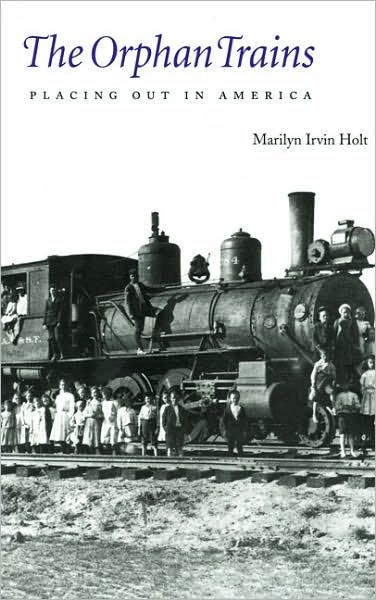
Placing Out


In the 1800s the West was opening up and in need of people. Eastern cities, on the other hand, often had a surfeit of the poor. Religious based charities struggled to help the masses of children who suffered the worst when their families were impoverished. But
there always seemed to be more children than places to help. At the same time a shift in how children were viewed took place. At one time children were seen as young heathens who needed to be educated to become productive adults. But in the 1800s children began to be looked at as pure innocents who if they were removed from a bad life, could be reformed and become productive citizens. Poor and orphaned children only needed to be put in good places and they in turn would become good. There was also the view that rural life
was innocent and free of vice. Large urban areas, on the other hand were viewed as full of vice and children growing up there had little hope of redemption. Placing out would change that.

To fill the needs of the Western farmers and businesses chronically short of labor children’s aid and send impoverished children to a
better world societies decided they could send children in need of homes out West to the families that needed them. Children housed in orphanages and asylums were offered to these families. Sometimes voluntarily, sometimes not. Children picked up by the police for loitering or stealing were often offered to the Aid societies.

They were moved in groups, by the train load, sometimes as many as 40 children to a rail car. The children ranged in age from 2 to 16, with some families placing out too, as well as the occasional adult seeking a new home.

Originating in Europe, placing out became common through the mid-1800s up through the 1920s. In the beginning, most of the organizations involved in arranging for the children to find appropriate families were religion based. This usually meant Protestant families. The committees wanted families who would commit to raising the children in their faith as well as guarantee them an education. The idea was not to just foster kids out for a few years, but to train them to be productive citizens.

At first the effort was applauded as not only aiding children in need, but in removing potential future criminals since most of these
children came from the more crowded, crime ridden areas of major cities. Places like New York’s Five Points had an organization that arranged homes for many placed out kids. But dissension grew and critics of the program voiced their opinions loudly. There were complaints of children being exploited – instead of being taken in to families, they were being treated as indentured servants.

Slavery had just ended in the late 1800s, and some saw outplacing as a way to secure new unpaid labor, since in many cases the outplaced children received room and board and an education. There were stories of abuse, or cruelty, even rape. Eventually the criticisms, changing laws and growing western populations, made placing out a thing of the past.


To learn more:

Orphan Trains

Placing out in Kansas

Child Labor in the US

Wednesday, August 4, 2010

Review of The Daemon


by Daniel Suarez

Dictionary.reference.com definition: "A program that is not invoked explicitly, but lies dormant waiting for some condition(s) to occur"

The label thriller has been slapped on a lot of books lately. Good books that deserve praise, but are they thrillers? The term is often used to describe any fast-paced crime story that isn't a cozy or traditional mystery. So when a book comes along that fits the label perfectly, it's well, thrilling.

The Daemon, the first part of what is being billed as a two part novel, is a truly spectacular thriller. It's seat-of-the-pants, stay-up-late and can't-put-down reading at its finest. It's a high-tech thrill ride, scarier because it's all based upon ongoing research. This is not science fiction, though I see it labeled as such. It's more appropriately called a techno-thriller.

Matthew Sobel is a computer programming genius. When he knew he was dying of cancer, he set about creating a series of complex programs that would be invoked when his obituary was run in media outlets. The first program run is apparently to eliminate the people who were involved with him in creating the programs. It is the death of one of these men that brings Peter Sebeck a detective in to investigate. Another bizarre murder occurs shortly after and Sebeck is drawn further and further into Sobel's game while everyone scrambles to find out what is going on, then trying to stop it. Sebeck finds himself locked in a fight with Sobel and a growing legion of disenfranchised black hat hackers who use wit, cunning and social engineering to wreak havoc on a world that often doesn't have a clue.

If you love taut, nonstop suspense then pick up The Daemon. It won't disappoint. It just might make you think, too.

Web site: